🕊️ A calm, senior-friendly practice for your home
寧
Steady Steps
Master YuNing Tai Chi
Free 7-Day Calendar
🪑 Seated & chair-supported · From the practice of a Wushu 6th Duan master

Gentle Morning Qigong You Can Do Seated

One slow move a day, about 5 minutes. Every move has a seated version and a standing-with-a-chair version, adapted from the daily practice of YuNing Wang (Chinese Wushu 6th Duan). No floor work, no kneeling, no deep squats.

Get the Free 7-Day Calendar See the 7 Moves
📜
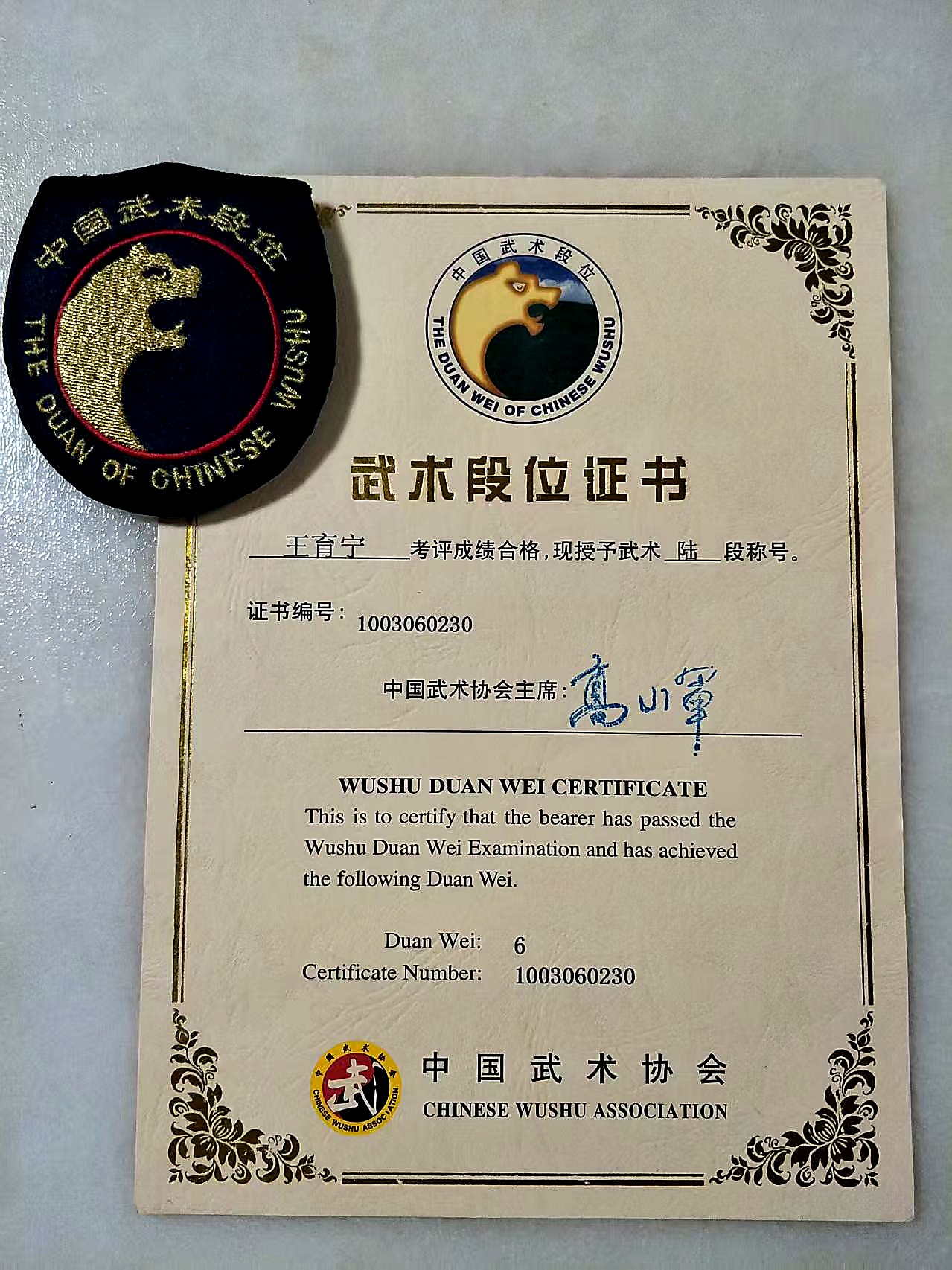
Chinese Wushu 6th Duan Advanced technical & theoretical rank
📰
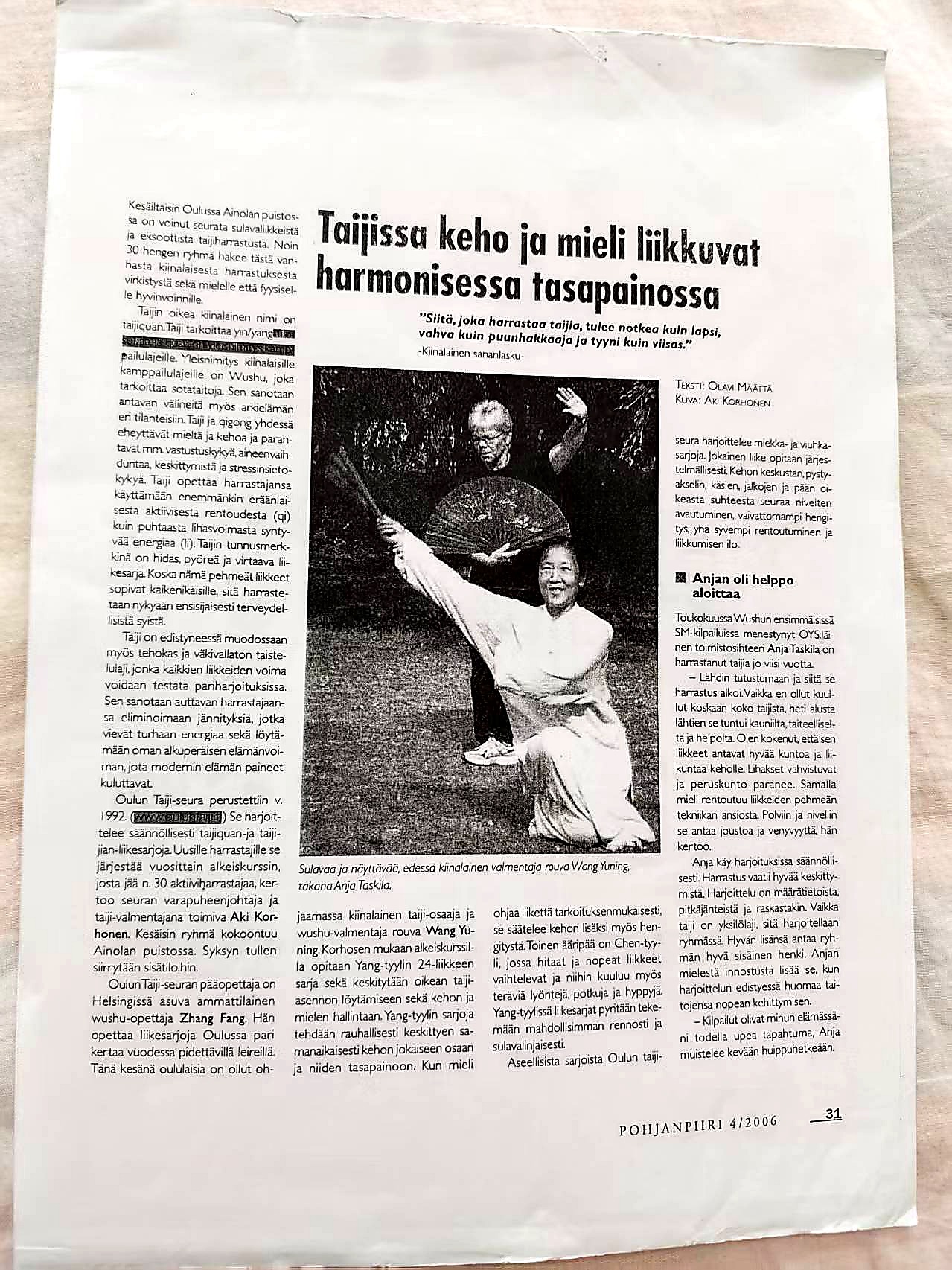
Nordic Press Record Documented Finland park instruction (2006)
🔬
Published Research Index 60 PubMed records, linked to the source
🪑
Seated Options for Every Move Standing is always optional
The Free 7-Day Plan

Seven Gentle Mornings, One Move a Day

Each move comes from Master YuNing's own practice and is shown here seated. Every move also has a standing option with a hand on a sturdy chair. Seated is always fine. Illustrations show a 3D model.

Day 1 · about 5 minutes

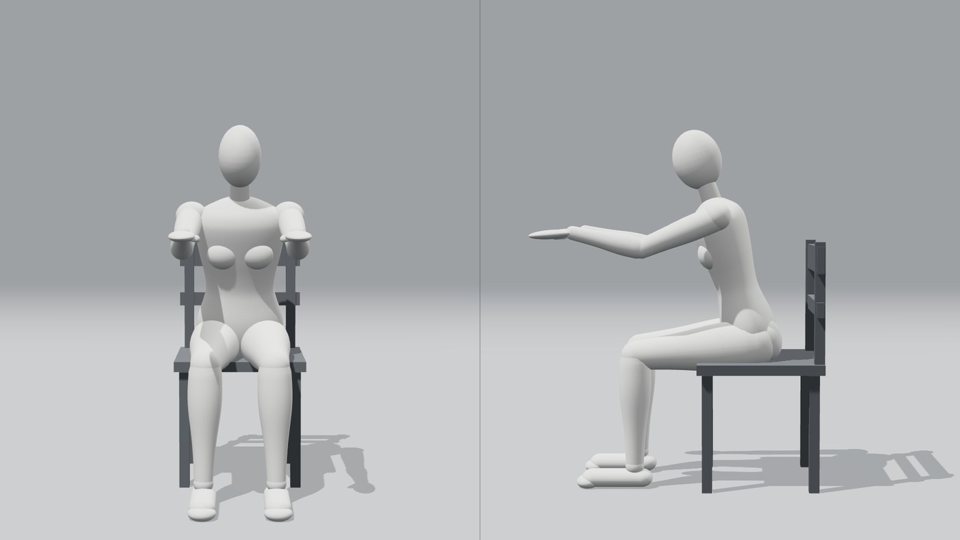
Settle & Breathe

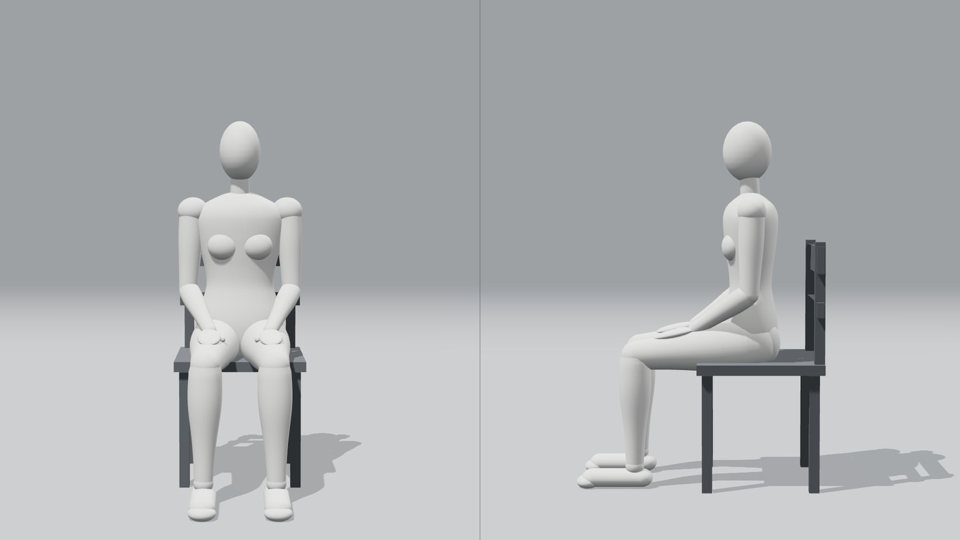
3D model, Seated hands on thighs, sitting tall (front and side views)

The starting posture for every move.

Sit near the front of a sturdy chair, feet flat and about hip-width apart. Sit tall, rest your hands on your thighs, let your shoulders soften, and take six slow breaths, breathing out a little longer than you breathe in.

Day 2 · about 5 minutes

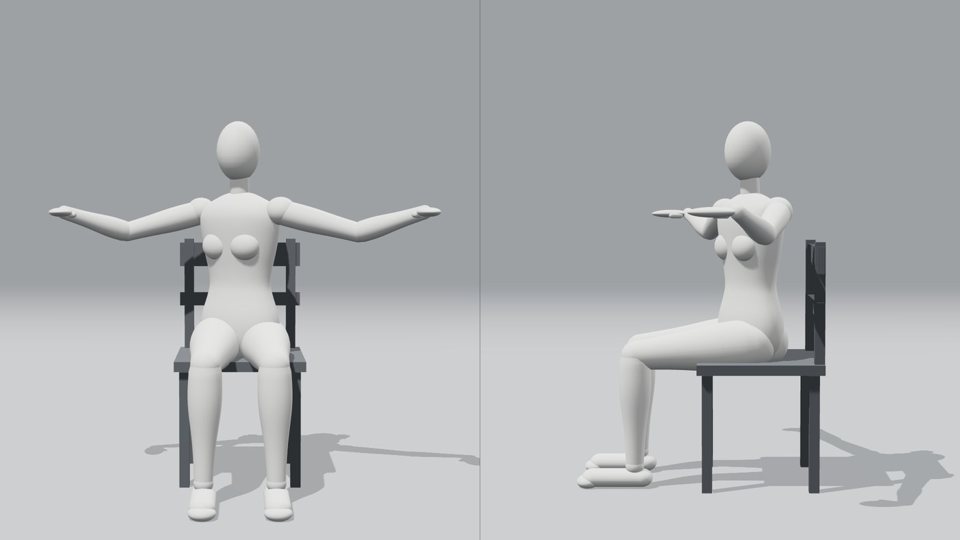
Open Arms

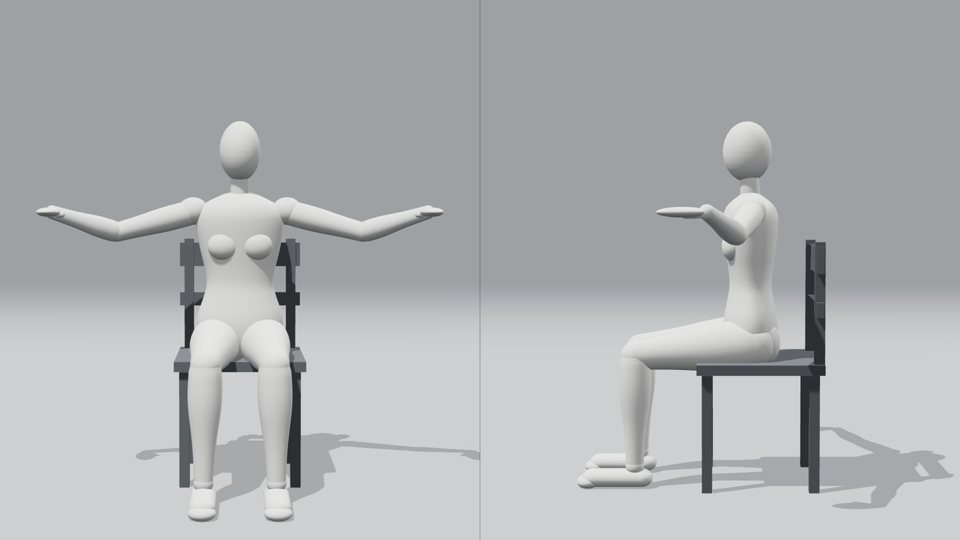
3D model, Seated, both arms floated out to shoulder height (front and side views)

From the opening of Master YuNing's daily warm-up routine.

Breathe in and let both arms float out to the sides, up to shoulder height or lower, palms facing down. Breathe out and let them float back down. Repeat 6 times. Standing option: one hand on the chair's backrest, open the free arm.

Day 3 · about 5 minutes

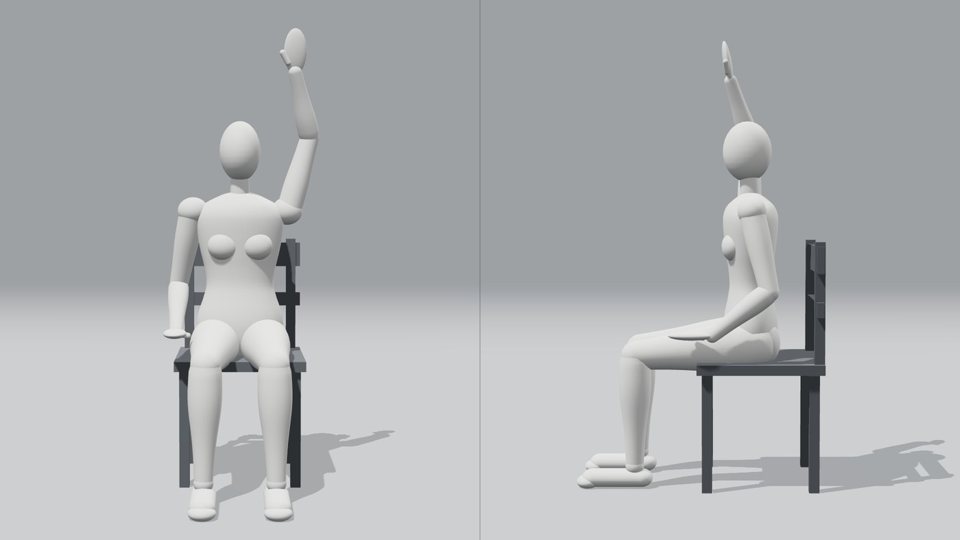
Lift & Press

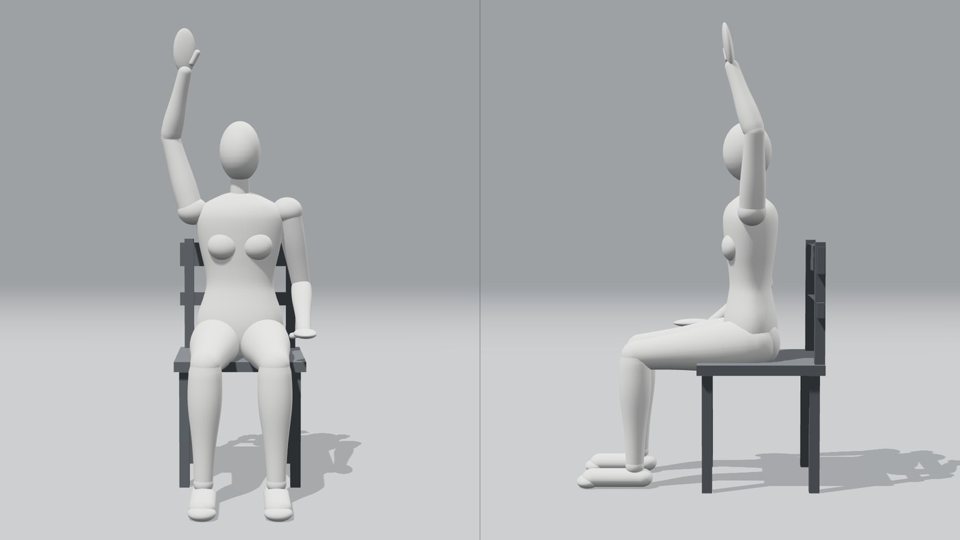
3D model, Seated, one palm lifted overhead, the other pressing down by the hip (front and side views)

Adapted from Master YuNing's “lift up, press down” (上举下按).

Slowly lift one palm up past your face toward the ceiling while the other palm presses gently down beside your hip, then switch. 8 times in all. Lift only as high as is comfortable; shoulder height is fine.

Day 4 · about 5 minutes

Gentle Waist Sway

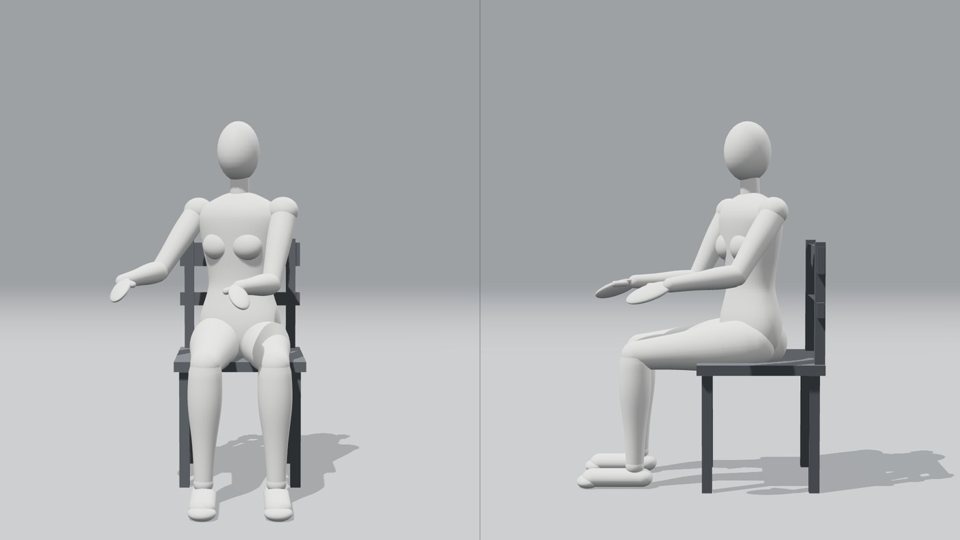
3D model, Seated, upper body turned slightly, arms swinging softly (front and side views)

Adapted from Master YuNing's flowing waist sway (拂尘晃腰), kept upright with no forward bend.

Turn your upper body a little to one side and let your arms swing softly with you, then turn to the other side. 8 times each way. Keep your hips and knees facing forward.

Day 5 · about 5 minutes

Shoulder Opener

3D model, Seated, leaning slightly forward with arms reaching forward (front and side views)

Adapted from Master YuNing's wall shoulder opener (开肩甲二式).

Sit facing a table with your forearms resting on it. Slide your hands a little forward and let your chest ease toward the table for 3 slow breaths. 3 times. Standing option: hands on a wall at shoulder height.

Day 6 · about 5 minutes

Open & Turn

3D model, Seated, arms open, upper body turned gently (front and side views)

From the second part of Master YuNing's daily warm-up routine.

Float both arms out to the sides, then turn your head and upper body gently to one side, letting your eyes follow your hand. Come back to the middle and turn to the other side. 6 times each way.

Day 7 · 8–10 minutes

Your Morning Flow

3D model, Seated, lift and press on the other side (front and side views)

Days 1–6 in one calm sequence.

Settle & Breathe (6 breaths), Open Arms (6), Lift & Press (8), Waist Sway (8 each way), Shoulder Opener (3), Open & Turn (6 each way), then 3 breaths to finish. Try it at the same time each morning.

🖨️ Free Large-Print PDF · 10 Pages

Free 7-Day Gentle Morning Qigong Starter (18pt Large Print)

One page per morning with pictures, three simple steps, a seated option and a chair-supported option, plus a fridge chart to tick off each day. Print it, or read it on a tablet.

  • ✅ 18pt High-Contrast Font
  • ✅ Free · Instant access
  • ✅ Standard 8.5x11" or A4 Print-Ready
Letter or A4 · Large 18pt print
Authentic Lineage & Compassion

Meet Your Guide: Master YuNing

True martial arts mastery is not about aggressive acrobatics. It is about quiet presence, rooted balance, and deep respect for the mature body.

🏛️ Chinese Wushu 6th Duan 📰 Finland Press 2006
YuNing Wang Traditional Yang Style Tai Chi Instructor
YuNing Wang (王育宁) Lead Instructor · Holder of Chinese Wushu 6th Duan
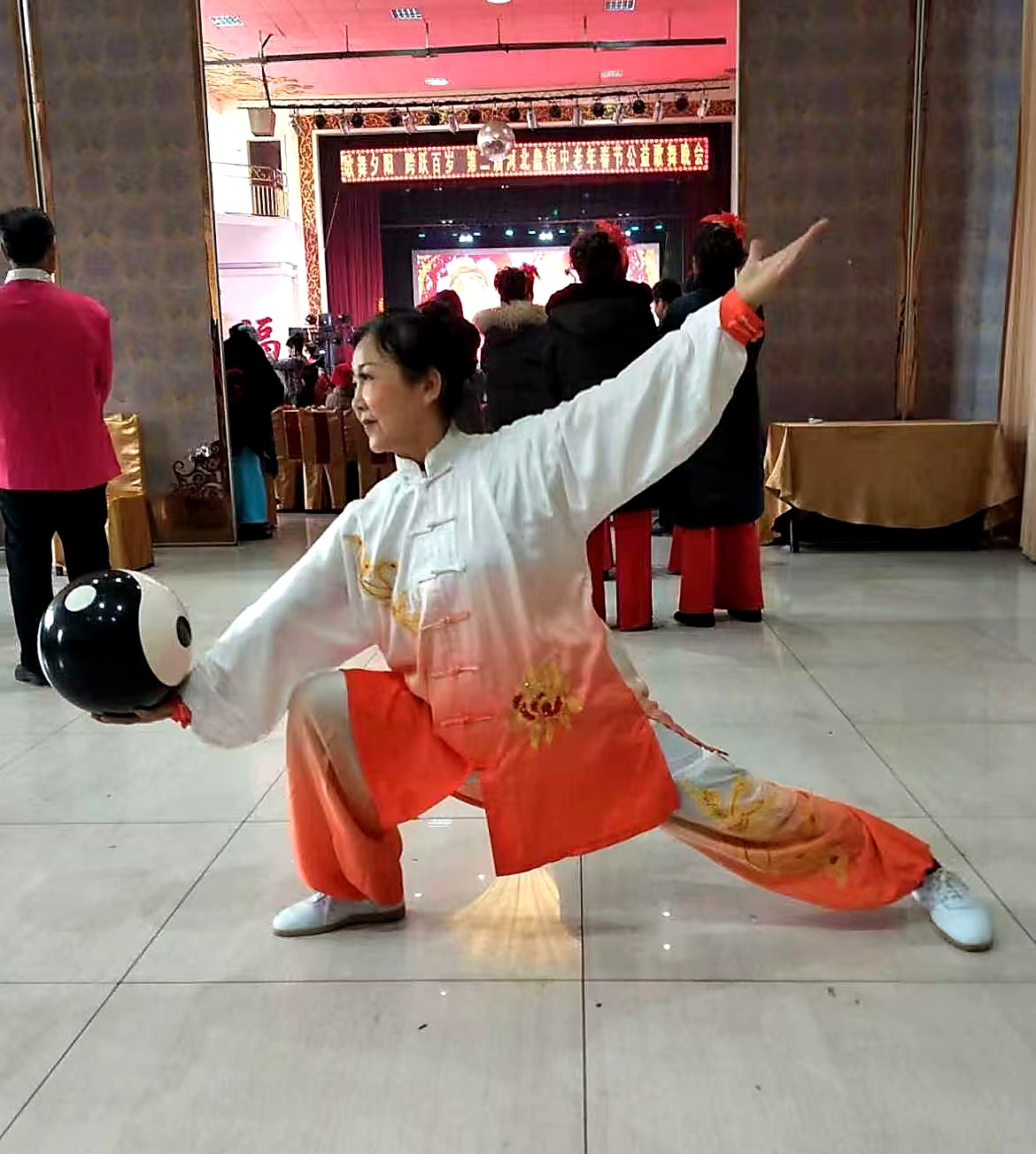
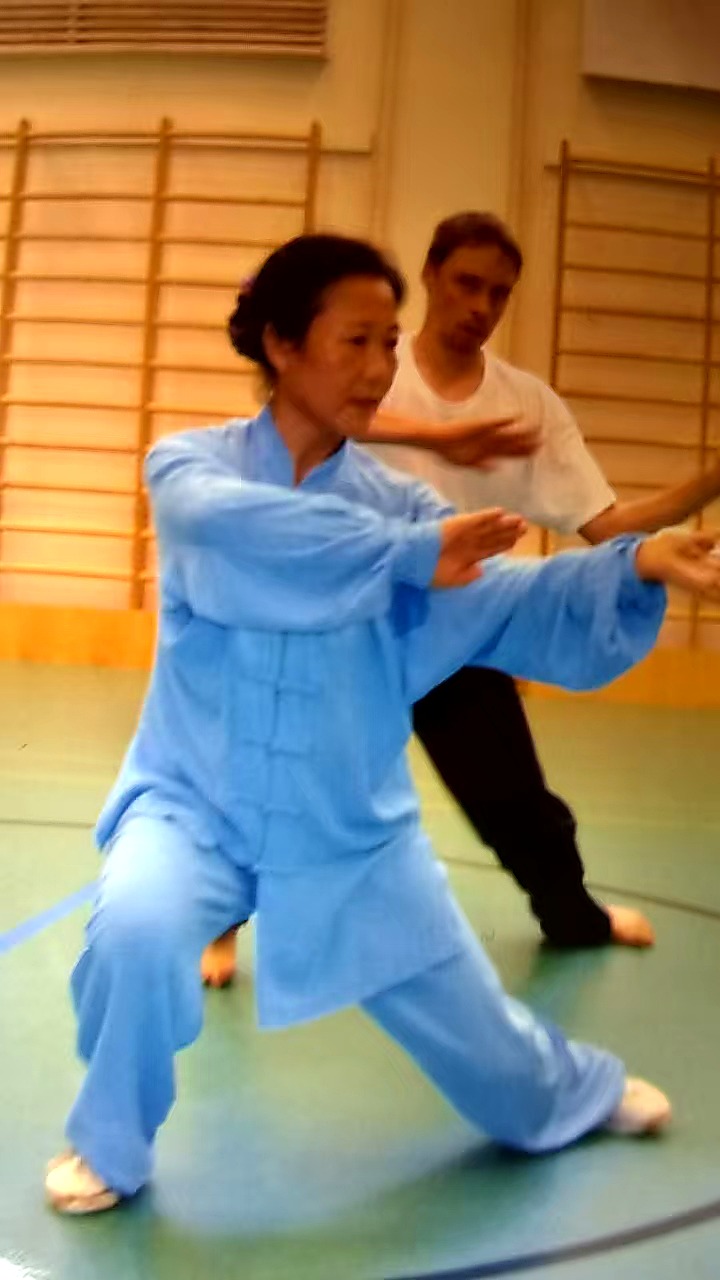
Shown in a traditional deep stance. The beginner course is practiced entirely in a high, chair-supported posture.
6th Duan certificate #1003060230 · Public fitness & martial arts credentials, not medical licenses.

YuNing Wang (王育宁) 6th Duan Wushu

Her teaching principle: in Yang-style Tai Chi, strength does not come from straining stiff joints. It comes from rooted stillness, gentle weight shifts and a relaxed posture.

YuNing Wang (王育宁) has practiced traditional Chinese martial arts and Yang-style Tai Chi for more than twenty years (Duan-ranked since 2002) and has taught since at least 2006. In 2010 she won first prizes for traditional Yang-style and Wu-style tai chi at Hebei provincial competitions, and in 2006 her outdoor classes in Finland were featured in the local press.

Nordic Newspaper Feature POHJANPIIRI 2006
📰 FEATURED IN FINNISH PRESS · 2006

"Taijissa keho ja mieli liikkuvat harmonisessa tasapainossa"

Full-page feature in the Finnish publication POHJANPIIRI (Issue 4/2006, Page 31) documenting instructor Wang Yuning guiding Nordic adult learners in graceful outdoor Yang-style form and relaxed joint alignment.

🔍 Click newspaper to inspect high-resolution archival clipping
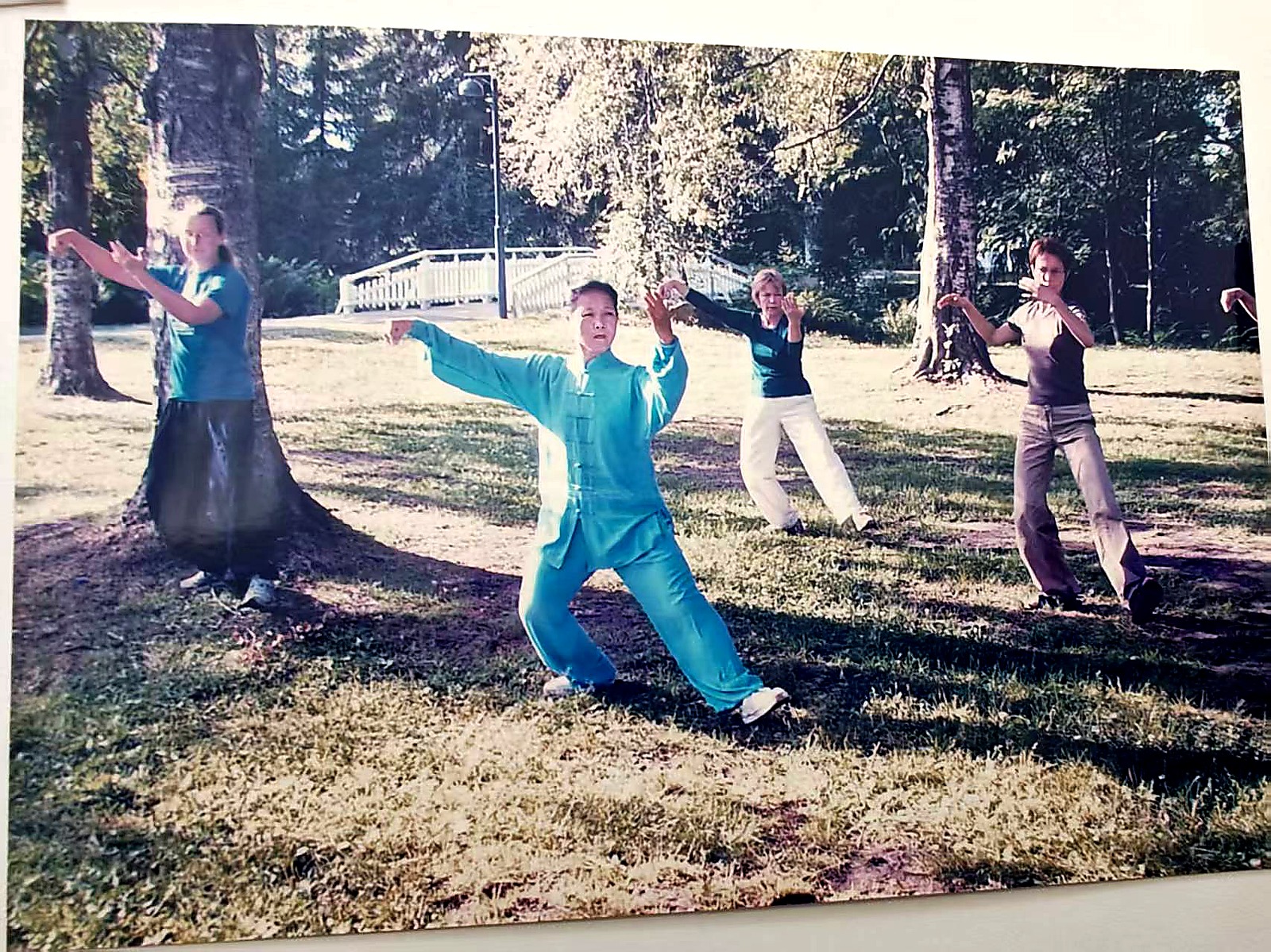
YuNing Wang teaching European students in Finland park
🌲 Finland Park Workshop (Outdoor Flow)
YuNing Wang hands-on postural alignment session
🥋 Hands-on Alignment (Gentle Guidance)
📜 First Prizes, Hebei Provincial Tai Chi Competitions (2010)
📜 Holder of Chinese Wushu 6th Duan
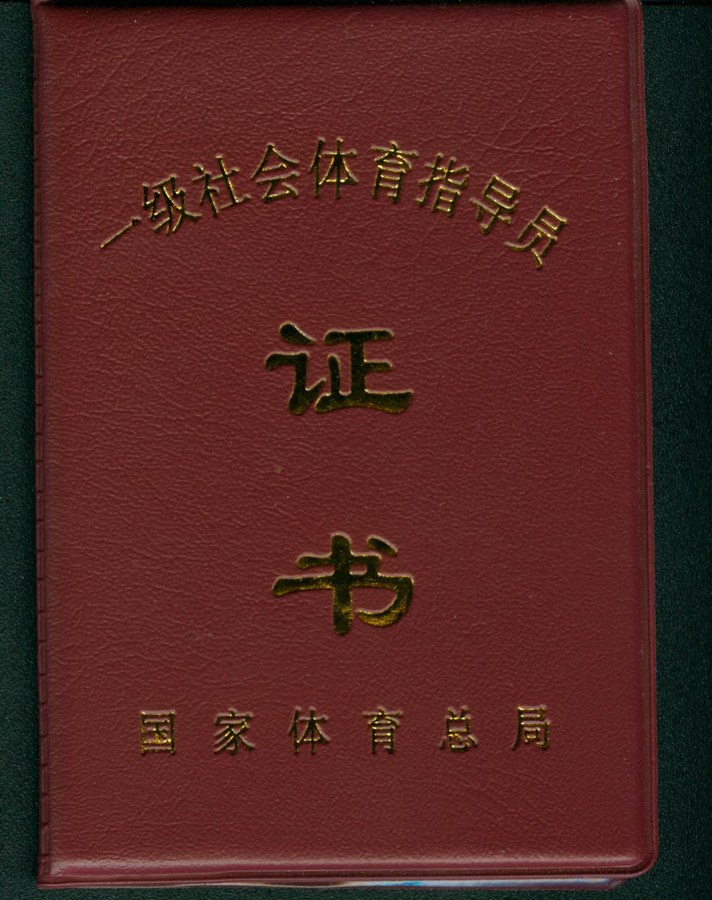
🏛️ First-class Social Sports Instructor (China)
🌲 Documented Outdoor Teaching in Finland (2006)
🎥 Real Footage · Master YuNing in Finland

See the Art Behind the Program

Archival footage of Master YuNing practicing Yang-style Tai Chi outdoors in Finland. The course itself is gentler: every lesson starts beside a sturdy chair and is demonstrated by a 3D anatomy model.

⏱️ 60-Second Preview

Real footage of YuNing Wang (not CGI). The narration is an AI-generated voice.

🎬 Real Archival Footage The teacher behind the program, in her own practice
🪑 The Course Is Chair-Supported No floor work · No deep stances like the ones above
🧍 3D Anatomy Demonstrations Course lessons show one movement at a time, front and back
📺 Living Room Ready Plays effortlessly on iPad, computer, or TV
Coming Next

The Full Gentle Morning Qigong Course

We're filming and building the lessons now. It will open once they're finished. Until then, nothing is for sale.

Gentle Morning Qigong with Master YuNing

Planned: $29 one-time
No subscription · 30-day refund policy when it opens
👪 Buying for a parent? Get the free starter now and try the first week together.
Start with the Free 7-Day Calendar
Questions

Common Questions

Can I do qigong sitting in a chair?

Yes. Every move in the free 7-day starter has a seated version, and the seated version is always a complete option. Use a sturdy chair without wheels, sit near the front of the seat, and keep your feet flat on the floor.

Is this gentle enough if my knees are stiff or sore?

The seated options put no weight on your knees, and the starter has no kneeling, deep squats or floor work. Move only as far as feels easy and stop if anything hurts. If you have had recent knee surgery or a joint replacement, check with your doctor first. We describe the movements; we don't claim they treat any knee condition.

What is qigong, and how is it different from tai chi?

Qigong is a family of slow, repeated movements done with relaxed breathing. Tai chi is a martial art made of longer linked sequences of postures. Both are slow and gentle. Master YuNing practices and teaches both; this starter uses short qigong-style moves because each one can be learned on its own.

How long does each session take?

About 5 minutes for Days 1 to 6, and 8 to 10 minutes for the Day 7 morning flow that puts them together.

Who designed the moves?

YuNing Wang (王育宁), holder of Chinese Wushu 6th Duan (Chinese Wushu Association, 2010) and a First-class Social Sports Instructor (China). The moves are adapted from her own daily practice, with seated and chair-supported options added. The illustrations show a 3D model, not a real person.

What do I need?

A sturdy chair, a table for the Day 5 shoulder opener, and comfortable shoes with a grip (or bare feet on a non-slip floor). Nothing else.

Is the calendar really free? What about the full course?

The 7-day large-print PDF is free. The full course is in preparation and is planned as a one-time purchase with no subscription; it will open once the lessons are finished.

Is this medical advice? Will it prevent falls?

No. Steady Steps is an educational movement guide. It does not diagnose, treat, cure or prevent any condition, including falls. Check with your doctor before starting if you have recently had surgery, a fall or a fracture, unexplained dizziness, or have been told to limit activity.

🌱 Your Practice Hub

7-Day Morning Check-In

Do one move each morning, then tap the day to mark it done. Progress is saved only on this device.

0 / 7 Sessions Completed
0 Days Current Morning Streak
0% Habit Progress
Suggested Next Session

Day 1: Settle & Breathe

About 5 minutes · Sit near the front of a sturdy chair, feet flat on the floor.

Tap any day to toggle completion: 🟢 Green indicates checked-in
Research Index

Published Research on Tai Chi in Older Adults

An index of 60 published PubMed records on Tai Chi, balance and mobility in older adults. Each title links to PubMed so you can read the abstract yourself.

Academic Transparency Notice: This library indexes published clinical studies on Tai Chi and balance-related movement in older adult populations generally. Steady Steps lessons have not been evaluated in clinical trials, and published research outcomes do not guarantee identical individual results. Steady Steps is an educational movement course and does not provide medical treatment.
📥 Download CSV
Year Study Design Participants Study Title (opens PubMed) Source
2026 Randomized Controlled Trial 110 older adults Additional Effects of 1-Hz rTMS Combined With Tai Chi Chuan on Dual-Task Performance Among Older Adults With Sleep Disorders and MCI: An fNIRS-Based Randomized Controlled Trial PMID 42734092 ↗
2026 Meta-Analysis 901 participants Exercise modalities for overall and domain-specific balance performance in older adults: A systematic review and Bayesian network meta-analysis PMID 42600321 ↗
2026 Systematic Review See abstract Comparative efficacy of traditional and modern mind-body exercises in middle-aged and older adults with knee osteoarthritis: a network meta-analysis of randomized controlled trials PMID 42465088 ↗
2026 Randomized Controlled Trial See abstract Effects of a 12-week Tai Chi program on postural stability and gait biomechanics in prefrail older adults: a randomized controlled study PMID 42337611 ↗
2026 Meta-Analysis 907 participants Impact of digital Tai Chi interventions on the physical and mental health of older adults: a systematic review and meta-analysis PMID 42326926 ↗
2026 Randomized Controlled Trial See abstract Effects of Tai Chi combined with elastic band training on muscle and executive inhibitory function in older adults with sarcopenia: a randomized controlled trial based on fNIRS PMID 42001466 ↗
2026 Systematic Review 213 participants Effectiveness of aquatic Tai Chi on balance indicators: a systematic review PMID 41982900 ↗
2026 Meta-Analysis 469 participants Effects of digitalized Tai Chi intervention on muscle function and physical performance in older adults: a systematic review and meta-analysis PMID 41929899 ↗
2026 Randomized Controlled Trial See abstract Lower-Extremity Interjoint Coordination During Stair Ascent in Knee Osteoarthritis and the Therapeutic Response to Tai Chi Training PMID 41921951 ↗
2026 Systematic Review See abstract Remote exercise snacking and fall-related functional outcomes in older adults: a systematic review including a meta-analysis PMID 41755895 ↗
2025 Meta-Analysis 671 patients The effectiveness of exercise interventions on muscle strength and balance function in pre-frail older adults: a systematic review and Bayesian network meta-analysis PMID 41675088 ↗
2026 Randomized Controlled Trial 106 participants The effectiveness of a nation-wide implemented fall prevention intervention in the Netherlands in reducing falls and fall-related injuries among community-dwelling older adults with an increased risk of falls: a randomized controlled trial PMID 41580594 ↗
2025 Meta-Analysis See abstract Effects of Tai Chi on balance and fall prevention in healthy older adults: a randomized controlled meta-analysis PMID 41567791 ↗
2025 Randomized Controlled Trial See abstract Efficacy of Tai Chi and Roliball Exercise on Balance, Mobility, and Cognitive Function in Community-Dwelling Older Adults: A Randomized Controlled Trial PMID 41255935 ↗
2025 Randomized Controlled Trial 47 participants Impact of a functional gait training program as a complementary strategy to improve physical function in older adults: a randomized clinical trial PMID 41120990 ↗
2026 Meta-Analysis 3387 participants Optimal type and dose of exercise to improve fall behavior in older adults: A systematic evaluation and network meta-analysis PMID 41110662 ↗
2026 Meta-Analysis See abstract Fall Prevention Interventions for Cognitively Impaired Older Adults: A Systematic Literature Review and Meta-Analysis PMID 41104487 ↗
2026 Meta-Analysis 3275 participants The impact of community-based Tai Chi exercise on intrinsic capacity improvement in the elderly: a meta-analysis of randomized controlled trials PMID 41075277 ↗
2025 Randomized Controlled Trial See abstract Effects of Tai Chi Chuan on balance function in adults 60 years or older with type 2 diabetes and mild cognitive impairment in China: A secondary analysis of a multi-center randomized clinical trial PMID 40820574 ↗
2025 Systematic Review See abstract Global research on Chinese martial arts (1974-2025): A bibliometric and visualization-based analysis using Web of Science PMID 40797508 ↗
2025 Randomized Controlled Trial 57 participants Efficacy of the power centering for seniors intervention on physical functional performance in older community-dwelling adults: a secondary analysis of a randomised controlled trial PMID 40775497 ↗
2025 Randomized Controlled Trial 150 older adults Comparing Tai Chi, Baduanjin, square dance, and Latin dance for cognitive and physical benefits in older adults: a randomized controlled trial PMID 40493105 ↗
2025 Randomized Controlled Trial 24 participants The effects of Tai Chi on clinical outcomes and gait biomechanics in knee osteoarthritis patients: a pilot randomized controlled trial PMID 40425665 ↗
2025 Randomized Controlled Trial 30 participants Multimodal respiratory muscle training and Tai Chi intervention with healthy older adults: A double-blind randomised placebo control trial PMID 40325717 ↗
2025 Randomized Controlled Trial See abstract Effect of Tai Chi Softball on Health-Related Outcomes in Elderly Men PMID 40304406 ↗
2025 Systematic Review See abstract Global trends and interdisciplinary insights in Tai Chi research: a bibliometric analysis (2004-2024) PMID 40276740 ↗
2025 Systematic Review See abstract Effects of physical exercise on physical and mental health in older adults with gait disorders: A systematic review PMID 40184899 ↗
2025 Meta-Analysis 2843 patients Effect of traditional Chinese exercises on knee osteoarthritis: A network meta-analysis PMID 39970456 ↗
2025 Systematic Review See abstract Effects of different types of Tai Chi intervention on motor function in older adults: a systematic review PMID 39841325 ↗
2025 Randomized Controlled Trial See abstract Multi-domain Online Therapeutic Investigation Of Neurocognition (MOTION) - A randomized comparative-effectiveness study of two remotely delivered mind-body interventions for older adults with cognitive decline PMID 39809343 ↗
2024 Systematic Review See abstract Effects of different exercise types on balance function in healthy older adults and Parkinson's patients: a systematic review PMID 39777047 ↗
2025 Meta-Analysis 1,972 participants A Systematic Review and Meta-Analysis of Asian Exercise Techniques and Various Physical Activity Interventions in Middle and Late Adulthood Patients With Knee Osteoarthritis PMID 39773493 ↗
2024 Meta-Analysis 167,864 participants Falls prevention interventions for community-dwelling older adults: systematic review and meta-analysis of benefits, harms, and patient values and preferences PMID 39593159 ↗
2024 Meta-Analysis 2000 participants Tai chi improves balance performance in healthy older adults: a systematic review and meta-analysis PMID 39588165 ↗
2024 Randomized Controlled Trial 90 older adults The Efficacy of 12-Week Progressive Home-Based Strength and Tai-Chi Exercise Snacking in Older Adults: A Mixed-Method Exploratory Randomised Control Trial PMID 39574284 ↗
2024 Systematic Review See abstract Effectiveness of Tai Chi exercise on balance, falls, and motor function in older adults: a meta-analysis PMID 39564508 ↗
2024 Meta-Analysis 3,333 older adults Comparing the effectiveness of five traditional Chinese exercises in improving balance function in older adults: a systematic review and Bayesian network meta-analysis PMID 39553713 ↗
2025 Meta-Analysis See abstract Effects of Tai Chi Chuan on Older Adults' Balance: A Systematic Review With Meta-Analysis PMID 39244194 ↗
2024 Randomized Controlled Trial See abstract Effectiveness of Resistance Band Use in Conjunction With Tai Chi Among Older Adults With Prefrailty to Improve Functional Fitness, Quality of Life, and Heart Rate Variability PMID 38691121 ↗
2024 Meta-Analysis 3470 participants The effects of different types of Tai Chi exercises on preventing falls in older adults: a systematic review and network meta-analysis PMID 38472538 ↗
2024 Randomized Controlled Trial 102 participants The effect of Tai Chi lower extremity exercise on the balance control of older adults in assistant living communities PMID 38448853 ↗
2023 Meta-Analysis See abstract Effects of traditional Chinese exercise on sleep quality: A systematic review and meta-analysis of randomized controlled trials PMID 37933009 ↗
2024 Randomized Controlled Trial See abstract Long-term Tai Chi practice in older adults is associated with "younger" functional abilities PMID 37905388 ↗
2023 Systematic Review See abstract Effects of tai chi on postural balance and quality of life among the elderly with gait disorders: A systematic review PMID 37768953 ↗
2023 Meta-Analysis See abstract Tai Chi for fall prevention and balance improvement in older adults: a systematic review and meta-analysis of randomized controlled trials PMID 37736087 ↗
2023 Meta-Analysis See abstract Effects of mind-body exercise on cognitive performance in middle-aged and older adults with mild cognitive impairment: A meta-analysis study PMID 37653776 ↗
2023 Randomized Controlled Trial 189 older adults Effects of home-based computerized cognitive training and tai chi exercise on cognitive functions in older adults with mild cognitive impairment PMID 37365961 ↗
2023 Randomized Controlled Trial See abstract Effectiveness of exercise on fall prevention in community-dwelling older adults: a 2-year randomized controlled study of 914 women PMID 37097767 ↗
2023 Meta-Analysis See abstract Effectiveness of Tai Chi exercise on fear of falling and balance in older adults: A meta-analysis PMID 37011491 ↗
2023 Randomized Controlled Trial See abstract A comparison between effects of Square-Stepping Exercise and Tai Chi Chuan on functional fitness and fear of falling in older women PMID 36853504 ↗
2022 Meta-Analysis See abstract Network meta-analysis of the efficacy of four traditional Chinese physical exercise therapies on the prevention of falls in the elderly PMID 36684937 ↗
2022 Randomized Controlled Trial 49 older adults Analyzing the influence of the combination of monochromatic infrared energy and tai chi exercise improve balance in community-dwelling older adults with lower-extremity disease: a double-blinded randomized controlled study PMID 36394727 ↗
2022 Meta-Analysis 804 participants The effect of Tai Chi in elderly individuals with sarcopenia and frailty: A systematic review and meta-analysis of randomized controlled trials PMID 36223875 ↗
2022 Systematic Review 996 participants The effects of different types of Tai Chi exercises on motor function in patients with Parkinson's disease: A network meta-analysis PMID 36105909 ↗
2022 Systematic Review See abstract Are Mind-Body Exercise Beneficial for Treating Pain, Function, and Quality of Life in Middle-Aged and Old People With Chronic Pain? A Systematic Review and Meta-Analysis PMID 35800981 ↗
2022 Randomized Controlled Trial See abstract Tai Chi for spatiotemporal gait features and dynamic balancing capacity in elderly female patients with non-specific low back pain: A six-week randomized controlled trial PMID 35599469 ↗
2022 Meta-Analysis See abstract Combined Tai Chi and cognitive interventions for older adults with or without cognitive impairment: A meta-analysis and systematic review PMID 35439549 ↗
2022 Meta-Analysis 407 participants Clinical relevance of Tai Chi on pain and physical function in adults with knee osteoarthritis: An ancillary meta-analysis of randomized controlled trials PMID 35379041 ↗
2022 Meta-Analysis See abstract Tai Chi Program to Improve Glucose Control and Quality of Life for the Elderly With Type 2 Diabetes: A Meta-analysis PMID 35282699 ↗
2021 Systematic Review See abstract Managing Fall Prevention through Exercise in Older Adults Afflicted by Cognitive and Strength Impairment PMID 34969039 ↗
Data source: PubMed / NCBI Entrez Database. Updated October 2026. CC BY 4.0 License.
🛡️

Safety First: Important Health Clearances

This educational course does not replace professional medical advice, physical therapy, or surgical rehabilitation.

Please obtain clinical clearance before beginning if any of the following apply:

  • You had joint replacement surgery (hip or knee) within the last six months.
  • You experience unexplained vertigo (a strong spinning feeling), fainting, or acute dizzy episodes.
  • You have unstable cardiovascular symptoms or chest discomfort upon mild effort.
  • You have severe peripheral neuropathy (numbness, tingling or no feeling in both feet).

Editorial Policy Notice: We maintain an ongoing error correction protocol. If you identify an outdated citation or unclear safety statement, please contact our review team at support@steadystepstaichi.com.